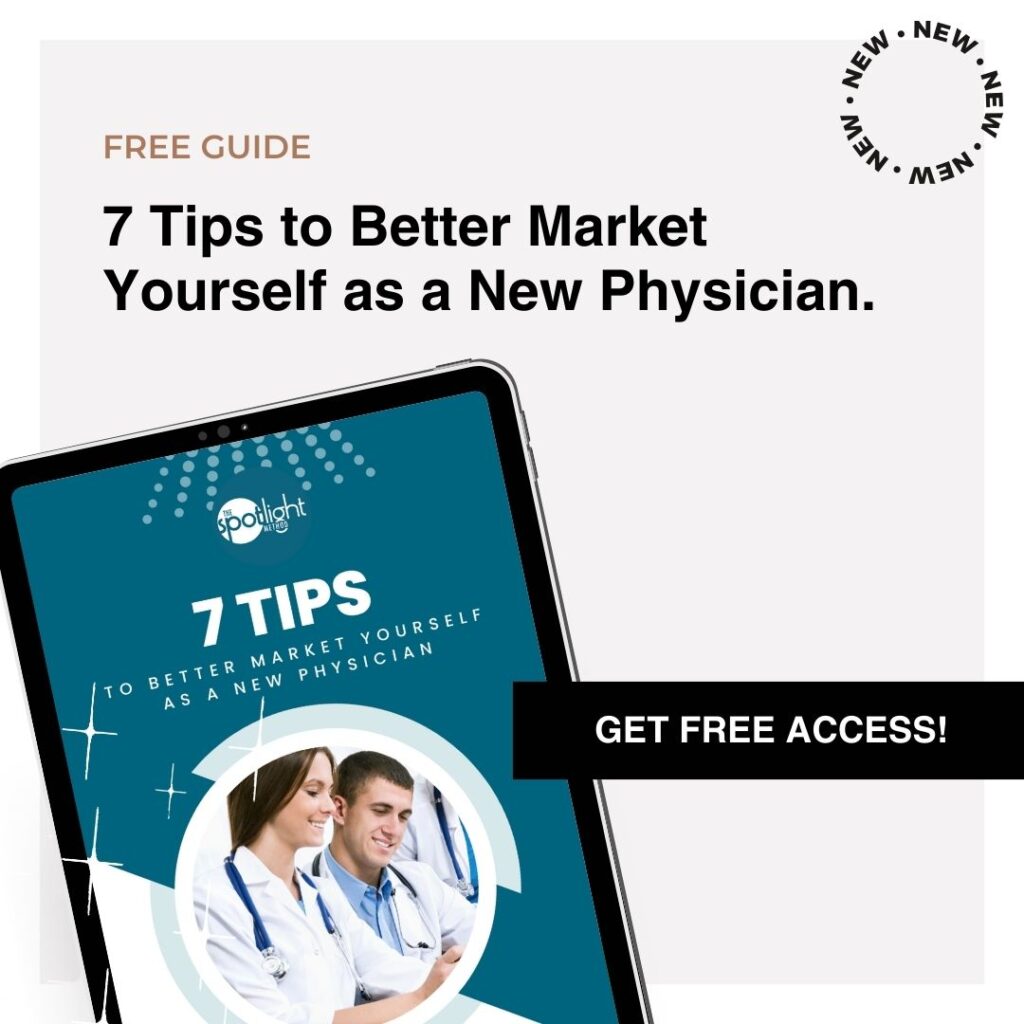
Transitioning from medical school to the media spotlight can be a significant step in your career as a doctor. They certainly didn’t teach this in med school, right?
There are a few ways to help you make this transition effectively:
Define Your Goals
Start by setting clear goals for why you want to be in the media spotlight. Is it to educate the public, promote a healthcare cause, or establish yourself as an expert in a particular medical field?
Build a Brand
Think of yourself like a brand – Nike, Apple, Starbucks. Even if I said Mick Jagger or Cher, very specific thoughts and expectations come to mind with all of these names.
Build a Digital Footprint with Intention
Create and maintain a cohesive online presence. From your website to social platforms and even review pages, everything should elicit the same feeling, sound uniform and be curated specific to you.
Take Notes From Your Patients
In addition to staying updated with the latest developments in your field, you don’t have to go far to know what consumers want to know about. Take notes on the types of questions most commonly asked by your patients, the things you find yourself saying over and over. Even a simple piece of advice or information could be exactly what journalists are looking to write about for their readers.
Pitch Ideas to Media Outlets
Reach out to local newspapers, TV stations, and online publications with story ideas or expert commentary related to your niche. Provide a clear and concise pitch, highlighting the value you can bring to their audience.
Be Responsive
I know you’re busy, but when it comes to a journalist – be it an editor, writer or TV producer – respond as quickly as you can. Media is a fast-paced world and sometimes it’s just a matter of who responds and is available first!
Build Relationships with Journalists
After responding quickly, you can cultivate relationships with healthcare journalists.journalists by providing thoughtful answers that go beyond a couple words, and speaking in layman’s terms.
Leverage Social Media
Use social media strategically to share valuable medical insights and engage with your audience. This is also another opportunity to further build media relationships by not only following journalists and engaging at a social level, but also sharing your media coverage once it goes live and tagging both the writer and the outlet!
Remember that transitioning to the media spotlight takes time and persistence. And even as a new doctor using these tips, you can establish yourself as a respected medical authority in the media.